


16 July 2025
Why Driver Retention Matters More Than Ever in European Logistics
Discover why driver retention is critical in European logistics, and how trucking companies can retain truckers, cut costs, and strengthen the supply chain.
For businesses with operations relying heavily on road freight transportation, driver shortage can result in delivery delays and increased costs as transportation prices rise to compensate for a shrinking labor pool. The average age of truck drivers continues to rise in Europe, while wages often fall short of the demands of this extracting job. To attract and retain new talent, companies must offer significantly more competitive compensation.
Before we start discussing the reasons why driver retention matters more than ever in European logistics, let us first identify the pain points that cause drivers to leave in the first place.
What Are the Factors Behind the Driver Shortage?

A recent report on driver shortage issues stated that 41% of drivers indicated that they were actively looking for a new driving job — a record high since the survey began. Let’s look at some reasons why a driver might choose to leave their current job.
Low compensation
If drivers feel that their driver pay isn’t equivalent to their contributions to the business and they could be better paid in a different company, they’ll look for other opportunities. Low driver pay directly leads to a lower driver retention rate, as drivers are more likely to leave for better-paying positions elsewhere. To improve retention, companies should invest in better compensation packages and ensure their driver pay remains competitive within the industry.
Work-Life Balance
The number one reason people aren’t interested in trucking is that they don’t want to spend weeks on the road away from their family and friends, especially on long haul routes. For many fleet and delivery drivers, long hours, irregular schedules, and the constant pressure to meet deadlines can create stress and anxiety and affect both their physical and mental health. These demanding schedules often result in poor quality of life, contributing to dissatisfaction and high turnover in the industry.
Lack of career advancement opportunities
Driving can be stressful, with long hours and time away from family. Without goals to pursue — like becoming a trainer, dispatcher, or fleet manager — drivers may feel uninspired and quit.
When people see that truck driving offer limited growth opportunities — with few chances to move into better-paying or more specialized roles — they’re less likely to choose it as a long-term career.
Lack of appreciation and respect
No matter how well a driver is paid, without respect and dignity in the workplace, it means little. According to Maslow’s hierarchy, respect aligns with the “esteem” level, where individuals seek recognition and appreciation, contributing to their self-worth. When drivers feel respected and valued, they are more likely to experience job fulfillment and engagement, ultimately contributing to their overall well-being and productivity.
What is Driver Retention?
Driver retention is the ability of a trucking firm to hold on to its truck drivers in its payroll for a long period of time. The driver retention rate measures the percentage of drivers who remain with a company over a set period, and a higher rate means less turnover and more stability. It focuses on reducing the driver shortage and improving job satisfaction.
Driver retention programs are structured initiatives — such as recognition, flexible scheduling, and continuous feedback — designed to improve retention and foster long-term loyalty. Better onboarding is a key strategy, helping new drivers feel comfortable, valued, and prepared from the start. Building a strong company culture and fostering a feedback culture, where companies actively gather feedback from drivers and act on it, are also crucial for keeping drivers engaged and satisfied.
For example, Baton Transport has achieved strong driver retention through its unique relay trucking model. By enabling drivers to operate in fixed regions and hand off trailers at designated relay points, Baton eliminates long-haul trips and reduces time spent away from home. This model allows drivers to sleep in their own beds more frequently, maintain a healthier work-life balance, and avoid the burnout associated with traditional long-distance routes.
Combined with structured career paths, safety incentives, and a clear feedback loop, Baton’s approach leads to higher job satisfaction and long-term driver loyalty. This improvement reflects a strong and sustainable driver retention strategy.
Why Driver Retention Matters More Than Ever in European Logistics
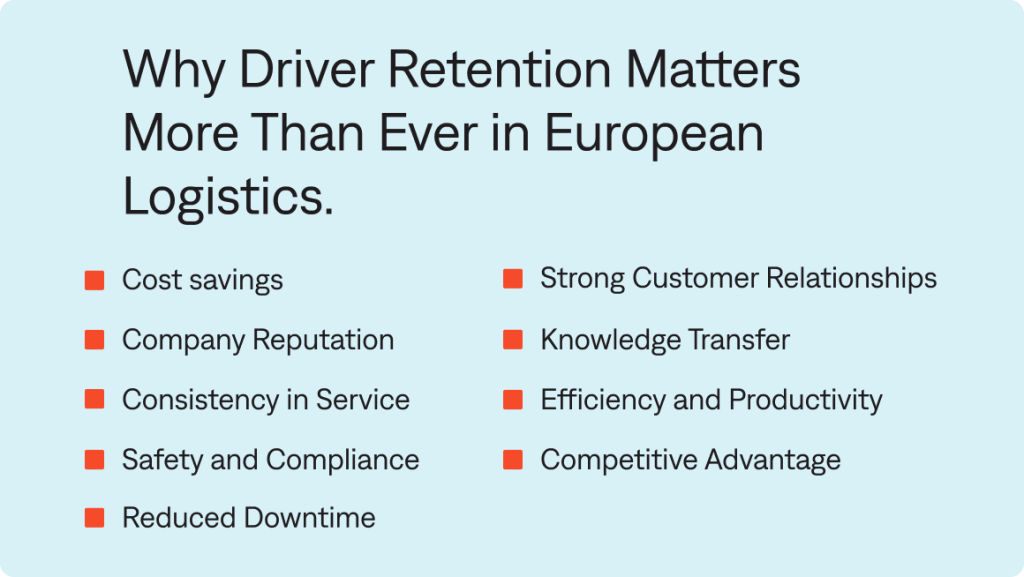
Driver retention plays a central role in controlling costs, maintaining service quality, and staying ahead in a competitive market. Here are the key reasons why driver retention matters more than ever in European logistics:
1. Cost savings
The first reason why employee retention is so important in European logistics is cost. Recruiting, hiring, and training new drivers is expensive. Costs for advertising job openings, screening and interviewing candidates, and providing the necessary training can quickly add up. By implementing driver retention strategies, you can save on these expenses and allocate resources to other areas of your business.
2. Company Reputation
Low driver retention rates can make a company appear unprofessional and unstable. The ability to keep a team of experienced drivers on staff not only builds a good reputation with drivers but also with clients. Companies that tend to the well-being of their drivers improve morale, reduce turnover, and attract new talent seeking a supportive work environment while having a team of drivers ready to deliver on the job.
3. Consistency in Service
Experienced drivers are familiar with routes, customers, and company procedures, leading to more consistent and reliable service. This consistency enhances customer satisfaction and loyalty. Customers appreciate drivers who know their preferences and needs, resulting in repeat business and positive word-of-mouth referrals.
4. Safety and Compliance
Experienced drivers understand safety protocols and regulations, and their strong safety records serve as an important metric of driver success and company culture. This results in fewer accidents and compliance issues. Retaining drivers who know safety concerns reduces the risk of costly accidents, such as vehicle damage, injury claims, or regulatory fines. This can save money on legal fees and insurance costs.
In addition, drivers who are familiar with safety procedures tend to proactively identify and address potential risks, contributing to a safer work environment for everyone.
5. Reduced Downtime
High turnover rates can lead to disruptions in operations as new drivers get to know various equipment and routes. Driver retention helps you minimise downtime and maintain productivity levels. Also, consistent driver staffing levels ensure that deliveries are made on schedule, avoiding delays that could impact customer satisfaction or contractual obligations.
6. Strong Customer Relationships
Long-term drivers often develop strong relationships with customers. When you retain drivers for a long time, they get to understand your culture’s presence, which helps build valuable connections. When customers interact with drivers who know their desires, it strengthens customer loyalty and differentiates your business from competitors.
7. Knowledge Transfer
Retaining knowledgeable drivers encourages knowledge transfer within your organisation, promoting skill development. Experienced drivers can serve as mentors and role models for less experienced colleagues, providing valuable insights and guidance. This promotes continuous learning and development, which empowers your workforce to adapt to changing industry trends and technologies.
8. Efficiency and Productivity
Drivers who have been with a company for a long time are also typically more efficient and productive. Familiarity with routes and procedures allows experienced drivers to complete deliveries on time. In addition, experienced drivers anticipate challenges such as traffic congestion or adverse weather conditions, and plan their routes accordingly to minimise delays. Their expertise in route planning and driving habits can also improve fuel efficiency, leading to operational cost savings.
9. Competitive Advantage
Driver retention gives your company a competitive edge in the market. Customers are more likely to choose a transport provider known for reliability, consistency, and excellent service, all of which are strengthened by driver retention. When you differentiate yourself from competitors, you can attract new customers and retain existing ones.
Baton Transport Helps Drivers Stay Happy On the Road
Baton Transport has the tools to help you maintain your most valuable assets — your drivers.
At Baton, the relay trucking model breaks down extensive journeys into manageable segments to keep drivers motivated. From home terminals to the final destination, each leg of the journey represents a distinct phase where our carriers take charge of the freight, ensuring a fluid transition and prompt delivery.
By implementing trucking relay systems and fostering industry-wide collaboration, Baton Trucking has made significant strides toward improving operational efficiency and enhancing driver well-being. Connect with us today to see the difference.
Frequently Asked Questions (FAQs)
To retain truck drivers in today’s competitive landscape, motor carriers must go beyond pay. Successful truck driver retention strategies include offering flexible schedules, improving working conditions, investing in career growth for new drivers, and creating a culture of respect. Relay models, like the one Baton Transport uses, also help reduce stress by minimizing time spent away from home.
The truck driver turnover rate remains high due to a combination of low wages, long hours, poor working conditions, and a lack of clear advancement opportunities. Young drivers are especially deterred by the lifestyle. To combat this, trucking companies must modernize their approach to recruiting and retaining drivers — including structured onboarding and mentorship programs for new drivers.
Driver safety is not only a legal requirement but a key part of job satisfaction. When truckers feel safe and heard, they are more likely to stay. Collecting driver feedback through regular check-ins and acting on it helps improve safety, boost morale, and build trust — all of which contribute to stronger retention and lower turnover.
High retention ensures experienced drivers stay on the wheel, keeping goods moving without delays. Stable driver staffing directly impacts the reliability of the supply chain, reducing missed deliveries and operational bottlenecks. In contrast, high turnover disrupts delivery schedules and increases costs for shippers and trucking companies alike.
Attracting young drivers and supporting them early with fair pay, strong onboarding, and mentorship helps build a future-ready workforce. Investing in working conditions leads to better health, satisfaction, and ultimately fewer resignations. Over time, this results in a lower truck driver turnover rate, improved safety records, and a more resilient trucking industry.