


10 June 2026
What Causes Sudden Transport Delays in Europe—and How to Respond
Sudden transport delays can disrupt supply chains across Europe. This guide explains the leading causes of freight delays, the logistics disruption they create, and practical ways to reduce supply chain risk and keep goods moving.
Speed is essential for supply chains. Whether you’re managing just-in-time manufacturing, handling perishable goods, or ensuring retail restocks, freight delays can halt production lines and erode customer trust. In this article, we break down the causes of sudden transport delays in Europe and how to respond.
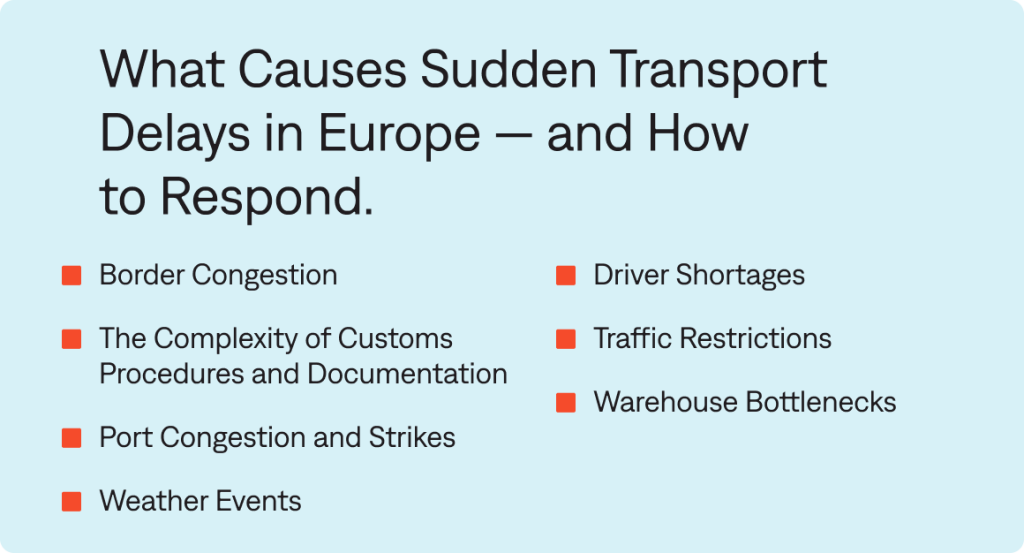
Border Congestion
Transporting goods across borders involves supply chain risks that may lead to explosions, spills, and toxic emissions. Theft and tampering are also rampant in cross-border freight, particularly for high-value goods. Safety protocols must be adhered to, which involves training drivers, properly packaging goods, and conducting regular equipment maintenance and inspections.
Heightened security concerns lead to long waiting times at border crossings, in addition to factors such as inspections, customs clearance, and security checks. Aging infrastructure at older crossings creates bottlenecks, resulting in delayed deliveries and increased shipping costs.
Solution: One of the most effective ways to combat congestion is to digitalise port operations using digital platforms, AI algorithms, and GPS tracking.
These tools improve the scheduling of vessel arrivals, berth allocations, cargo handling, and truck appointments. When ports have access to accurate, real-time data, they can allocate resources accurately and avoid border congestion.
The Complexity of Customs Procedures and Documentation
Complex customs documentation slows down shipments. Required documents such as commercial invoices, bills of lading, certificates of origin, and customs declarations must be accurately presented. An inaccurate declaration of the value of goods can lead to additional investigation, resulting in freight delays. Careless errors, omissions, or inconsistencies in these documents often cause costly freight delays at customs checkpoints. Human error in paperwork is one of the most avoidable causes of transport delays.
Solution: Digitalisation of Documentation
Digitalising documentation and using common digital platforms can reduce paperwork and ease communication between countries and regulatory authorities.
Digital platforms should be adopted to manage shipping documentation and streamline the preparation, submission, and verification of essential paperwork. Transport businesses can reduce supply chain risk by digitalising these processes and avoid long waiting times at border crossings caused by customs clearance.
Port Congestion and Strikes
Port congestion and strikes are major causes of sudden shipping delays. When ports are too crowded, ships must wait their turn to dock and unload goods. This waiting leads to freight delays in the supply chain, affecting production schedules and product availability. Congested ports are most common during peak seasons or when a port lacks capacity to handle high traffic volumes.
Port workers’ strikes add to the congestion. If workers are on strike, container unloading and cargo processing slow down or stop entirely. This can cause significant freight delays since no goods are moving in or out of the port. In the worst cases, port closures halt traffic until further notice.
Solution: To reduce the impact of port congestion and strikes, companies should use alternate ports or adjust shipping schedules in advance. Building safety stock to cushion the effect of expected freight delays is also a sound response to sudden transport delays. These strategies help businesses maintain smoother operations despite logistics disruptions at ports.
Weather Events
Weather anomalies, like storms and hurricanes, cause sudden transport delays. Unfavourable weather conditions can delay container ships by forcing them to take longer routes or stop at safe ports until conditions improve. Extreme weather events can halt trucking and rail transport outright, and such natural disasters have become more frequent and more costly for supply chains.
Heavy rains and floods damage roads. This makes it hard for trucks to deliver goods from ports to stores and warehouses on time. When transportation routes are blocked or damaged, sudden transport delays follow.
Solution: To minimise the effects of bad weather, trucking companies monitor weather patterns using weather forecasting platforms, GPS-based fleet management systems, and real-time alerts. They divert to routes that avoid major storms and adjust schedules in advance. These tools give dispatchers visibility into conditions along planned routes and help them spot potential logistics disruptions before deliveries are affected. The planning helps, though sometimes the weather is too unpredictable and still causes problems.
Driver Shortages
A 2024 report by the International Road Transport Union (IRU) asserts that Europe faces a shortage of approximately 426,000 drivers, accounting for about 10% of total demand. The current driver shortage has a significant impact on the industry, affecting delivery and causing transport delays. The shortage results in increased shipping costs, delivery delays, and greater strain on the remaining workforce. The scarcity of skilled labour behind the wheel is one of the hardest causes to fix quickly.
Solution: Long hours of driving can take a toll on truck drivers, leading to fatigue and lower productivity. Driver hours-of-service regulations cap how long anyone can stay on the road, which protects safety but can create scheduling bottlenecks when capacity is already tight.
Relay or non-stop trucking addresses this by allowing drivers to take breaks and rest while another driver takes over. In relay trucking, the drivers also go home daily. Adequate rest and a trucking routine that more closely resembles a day job both improve driver well-being and road safety, reducing the supply chain risk of accidents and transport delays caused by driver fatigue.
Traffic Restrictions
Traffic challenges affect delivery times, especially in urban areas. Road congestion slows delivery trucks and makes schedules hard to hold. Accidents on major highways can close routes entirely and add hours of delay. Transport delays affect the timely arrival of goods to warehouses and stores, disrupting planned stock levels and potentially leading to shortages.
Solution: To manage traffic congestion, trucking companies use advanced route-planning software to find the most efficient routes. They also schedule deliveries during off-peak hours to avoid the busiest times. Dynamic re-routing can ease congestion by redirecting traffic in real time when an incident closes a road ahead.
Expedited trucking companies leverage IoT sensors to track shipments. Technologies such as GPS tracking, IoT sensors, and automated alerts provide real-time status updates on the shipment’s whereabouts, traffic conditions, and estimated time of arrival. These enable logistics teams to monitor their entire fleet, making it easier to take corrective measures when disruptions occur.
Warehouse Bottlenecks
When teams cannot see real-time stock levels, they rely on assumptions. This leads to overstocking, stockouts, and frequent search time. Workers spend minutes or even hours trying to locate products, and fulfilment accuracy suffers. As the warehouse becomes busier, the lack of visibility turns into repeated transport delays. Late arrivals at the dock cause cascading schedule failures and warehouse congestion downstream.
Solution: Expedited trucking companies can partner with tech-enabled warehouses to reduce loading and unloading times. Technology like yard automation, cloud-connected Warehouse Management Systems, barcode scanning, and dynamic scheduling improves warehouse operations by cutting wait times and physical handling. For example, automatic docking stations can communicate directly with incoming trucks. Inventory loading times drop when delays between warehouse systems and trucking fleets are removed, improving vehicle turnaround for faster deliveries.
Baton Transport Can Be Your Expedited Trucking Partner
Baton Transport is one of the most trusted expedited trucking service providers in Europe, guaranteeing exceptional speed and shipment safety despite sudden transport delays. Their relay trucking service ensures nonstop, direct service. Truck drivers work a nine-hour shift and switch services, giving each adequate rest to work productively on the next shift. Baton’s extensive European network ensures that goods are delivered quickly and safely, even over long distances. This wide reach allows Baton to transport cargo virtually anywhere, guaranteeing a strong response to transport delays in Europe.
Baton also uses real-time tracking and dispatch systems to mitigate supply chain risks tied to freight delays. Long-haul transportation technology ensures that freight delays are monitored and any issues are resolved immediately. Baton’s supply chain management experts create customised solutions for each customer. They work closely with clients to understand their unique requirements and develop tailored logistics strategies.
Connect with us today to see the difference our shipping services make.

Frequently Asked Questions
Common causes of transport delays include extreme weather and labour shortages, alongside border and port congestion, complex customs clearance, accidents on major highways, and aging infrastructure at older crossings. Labour shortages limit operational capacity and slow the movement of goods, while driver hours-of-service regulations can create bottlenecks when capacity is already thin. Most sudden transport delays trace back to one of these supply chain risks.
Congested ports force ships to wait to dock, and that delay ripples through the supply chain into production schedules and product availability. When labour strikes trigger port closures, no cargo moves until further notice, and shipping delays can lead to stockouts of high-demand items. Reduced shipping capacity during these disruptions pushes increased shipping costs onto shippers. Alternate ports and safety stock are the usual cushions against this supply chain disruption.
Yes. Real-time GPS tracking and IoT sensors give logistics teams live visibility into traffic, weather, and shipment location, so they can act before a problem spreads. Dynamic re-routing redirects trucks around closed roads in real time. Predictive maintenance monitors vehicle health and heads off breakdowns before they cause delays. Investing in AI technology enhances supply chain visibility across the network, which is often the difference between a managed delay and a cascading failure.
Preparation beats reaction. Diversifying suppliers, or dual sourcing, reduces vulnerability to a single supplier failure, and holding safety stock acts as insurance when raw materials or components arrive late. Scenario planning and regular risk assessments let teams manage disruptions proactively rather than scrambling. Modern supply chains that map their transportation routes and build contingency plans recover from extreme weather and port congestion far faster than those that don’t.
Customs documentation is detailed and unforgiving. Commercial invoices, bills of lading, certificates of origin, and customs declarations must all be accurate, and human error in any of them can trigger an investigation and costly delays at checkpoints. Inaccurate value declarations are a frequent culprit and a major concern. Digitising shipping documentation onto shared platforms cuts paperwork, eases communication between regulatory authorities, and helps transport businesses avoid long waits at border crossings.