


10 September 2025
How Contract Logistics Helps Streamline Supply Chain Operations in Europe
In Europe, contract logistics helps companies outsource functions like warehousing, distribution, and customs handling to gain flexibility, reduce risks, and stay focused on growth.
In Europe, businesses increasingly rely on contract logistics partners to manage complex supply chain functions such as trucking, warehousing, distribution, and other value-added services. This shift reflects a recognition that logistics is not simply a cost to minimize but a strategic enabler that creates flexibility, efficiency, and long-term growth opportunities.
So, what exactly is contract logistics? It specifically refers to long-term agreements between a shipper and a logistics provider to manage their entire supply chain or specific logistics functions. The stakeholders together agree on the service price, acceptable service level, service timeframe, and payment terms by signing a contract.
Consider a shipper needing scheduled weekly freight deliveries to their production center. Instead of owning and running a dedicated trucking fleet, the shipper can sign a contract with a logistics service provider (LSP), who would deliver based on the contract. This, in essence, is termed as contract logistics.
For example, imagine a Bulgarian power plant that requires 100,000 metric tons of coal per year from Poland. Rather than transporting the entire volume in a single shipment, the plant may decide on an economic order quantity and divide the demand into 30 evenly sized shipments spread across the year. A long-term contract would then be established to cover all 30 shipments, ensuring predictable supply. When structuring such contract logistics agreements, companies must carefully evaluate factors such as cost efficiency, delivery schedules, and risk management.
How Contract Logistics Helps Streamline Supply Chain Operations in the European Union
Contract logistics plays a strategic role in supporting shippers looking to streamline their supply chain operations. The impact of contract logistics on business operations can be significant when done right, leading to improved efficiency, reduced costs, and enhanced competitiveness.
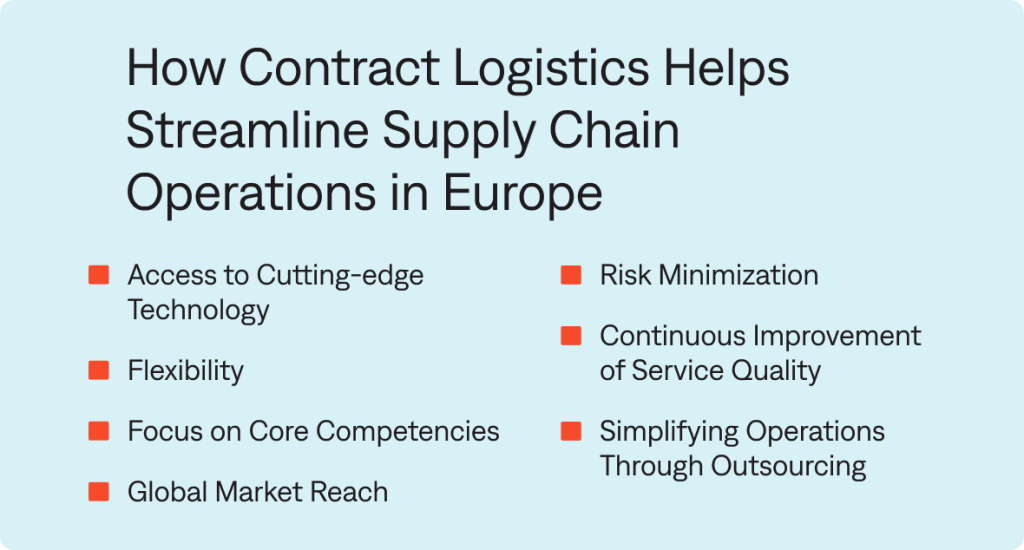
Here are the key benefits of contract logistics:
Access to Cutting-Edge Warehousing Technology
In today’s digital age, technology plays a vital role in streamlining supply chain operations, and logistics service providers have specialized know-how that companies often lack. Most contract logistics companies embrace advanced transportation management systems (TMS), warehouse management systems (WMS), automation, and predictive analytics to manage freight, track shipments, and provide real-time visibility of inventory.
The right technology simplifies supply chain operations, leading to faster freight movement, accurate inventory, quicker order processing, and improved supply chain visibility. For instance, a manufacturer can see when raw materials are delayed at customs and proactively adjust production schedules, minimizing downtime and cost overruns.
Flexibility
The supply chain market is subject to continuous change. Buyer behaviour, competition, innovations, and geopolitical influences are forcing the industry to adapt its logistics strategies. As your supply chain evolves over time, you would require a flexible contract logistics provider that can adapt to meet those changing needs. These providers also anticipate and prepare for expected changes in market demand, regulations, or supply chain disruptions, ensuring your operations remain resilient.
Last-mile delivery integration is a prime example. Consumer expectations in Europe continue to shift toward same-day or next-day deliveries. Contract logistics partners can integrate last-mile carriers into broader distribution networks, allowing businesses to expand their service offerings without investing heavily in their own delivery fleets. This flexibility is particularly valuable for e-commerce retailers, which face seasonal demand spikes and shifting delivery patterns.
Focus on Core Competencies
Managing logistics challenges can be time-consuming and resource-intensive for businesses. Outsourcing contract logistics allows companies to delegate complex logistics work to specialized providers, freeing up internal resources. When companies outsource contract logistics, they free up valuable time and resources to focus on areas such as product development, marketing, and customer service. This allows for better resource allocation that could lead to innovation and improve competitiveness. For example, a fashion retailer can focus on design, branding, and customer experience while its logistics partner handles complex distribution networks across European markets.
Global Market Reach
As your business evolves and grows, it is essential to partner with a contract logistics provider that can scale its operations accordingly. For companies that want to operate globally, an experienced logistics service provider enables easier entry into new markets. Germany is recognized as a leading hub for contract logistics in Europe, with many providers offering extensive expertise and networks. Contract logistics providers assist businesses that want to enter foreign arenas through established networks, customs knowledge, and international experience. They obtain compliance and documentation inclinations, overseeing local delivery challenges on behalf of businesses that want to scale. This allows businesses to expand beyond their geographical borders without investing in their own logistics infrastructure.
Risk Minimization
When you outsource to a contract logistics partner, you offload the risks of supply chain disruptions, freight damage, and warehouse bottlenecks. This helps cut delays and extra costs associated with such disruptions, helping your supply chain operations run smoothly.
Continuous Improvement of Service Quality
Contract logistics providers prioritise customer satisfaction and have robust processes to ensure timely and accurate order fulfillment. Contract logistics partners leverage their expertise, technology, and infrastructure to improve order accuracy, reduce lead times, and enhance overall customer satisfaction. This contributes to customer loyalty, repeat business, and a positive brand reputation.
Simplifying Operations Through Outsourcing
Many trucking companies in Europe operate across multiple countries with different regulations, customer expectations, and delivery requirements. Managing these intricacies internally can drain resources and distract from core business objectives. By partnering with contract logistics providers like Baton Transport, trucking companies can outsource critical but time-intensive tasks such as customs handling. Providers often have specialized division dedicated to customs handling, compliance, and other critical logistics functions, ensuring that each aspect is managed by experts in the field. For example, a company importing goods into the EU can rely on its logistics partner to manage compliance with customs declarations and duties, ensuring smoother cross-border trade without delays or penalties.
Baton Is Your Trusted Logistics Service Provider and Contract Logistics Partner
Contract logistics isn’t just a cost-saving strategy — it’s a strategic enabler that supports growth, innovation, and long-term competitiveness. By eliminating overhead costs, streamlining deliveries, and boosting on-time performance, Baton Transport ensures you can focus on growing your business, not managing logistics.
The company uses advanced technology platforms that enhance visibility and allow businesses to track goods in real time, ensuring better control and decision-making. With its expertise across European markets, Baton Transport enables companies to focus on their core business activities while gaining flexibility, scalability, and a trusted partner that streamlines operations.
Ready to unlock smarter solutions and take your logistics operations to the next level?
Contact us today to discuss how our bespoke services can elevate your supply chain, drive efficiency, and contribute to the overall success of your business.
Frequently Asked Questions (FAQs)
Contract logistics allows trucking companies to streamline complex supply chain tasks such as warehousing, customs handling, and distribution. By outsourcing these functions, a company can reduce overhead costs, improve cargo visibility, and focus on expanding its core trucking operations.
Many experts describe today as a golden age for the trucking industry, as technology, automation, and cross-border networks make freight movements more efficient than ever. Contract logistics providers help businesses seize this opportunity by offering advanced trailer fleets, integrated digital tools, and scalable solutions that meet evolving customer expectations.
Yes. A trucking company doesn’t need to outsource its entire supply chain. Businesses can outsource just one division — for example, customs handling or last-mile delivery — while continuing to manage other areas internally. This half-outsourcing approach gives companies flexibility and control while still benefiting from specialized expertise.
By working with a logistics partner, companies can ensure cargo is tracked in real time, delivery schedules are met, and trailers are utilized more efficiently. Advanced technology platforms also provide context for better decision-making, such as predicting delays at borders or optimizing trailer loads to minimize empty kilometers.
When choosing a provider, a company should evaluate their ability to manage cargo securely, operate a modern trailer fleet, and offer specialized divisions (such as customs or distribution). Equally important is whether the provider can scale with your business and adapt to changing market context, ensuring long-term competitiveness.